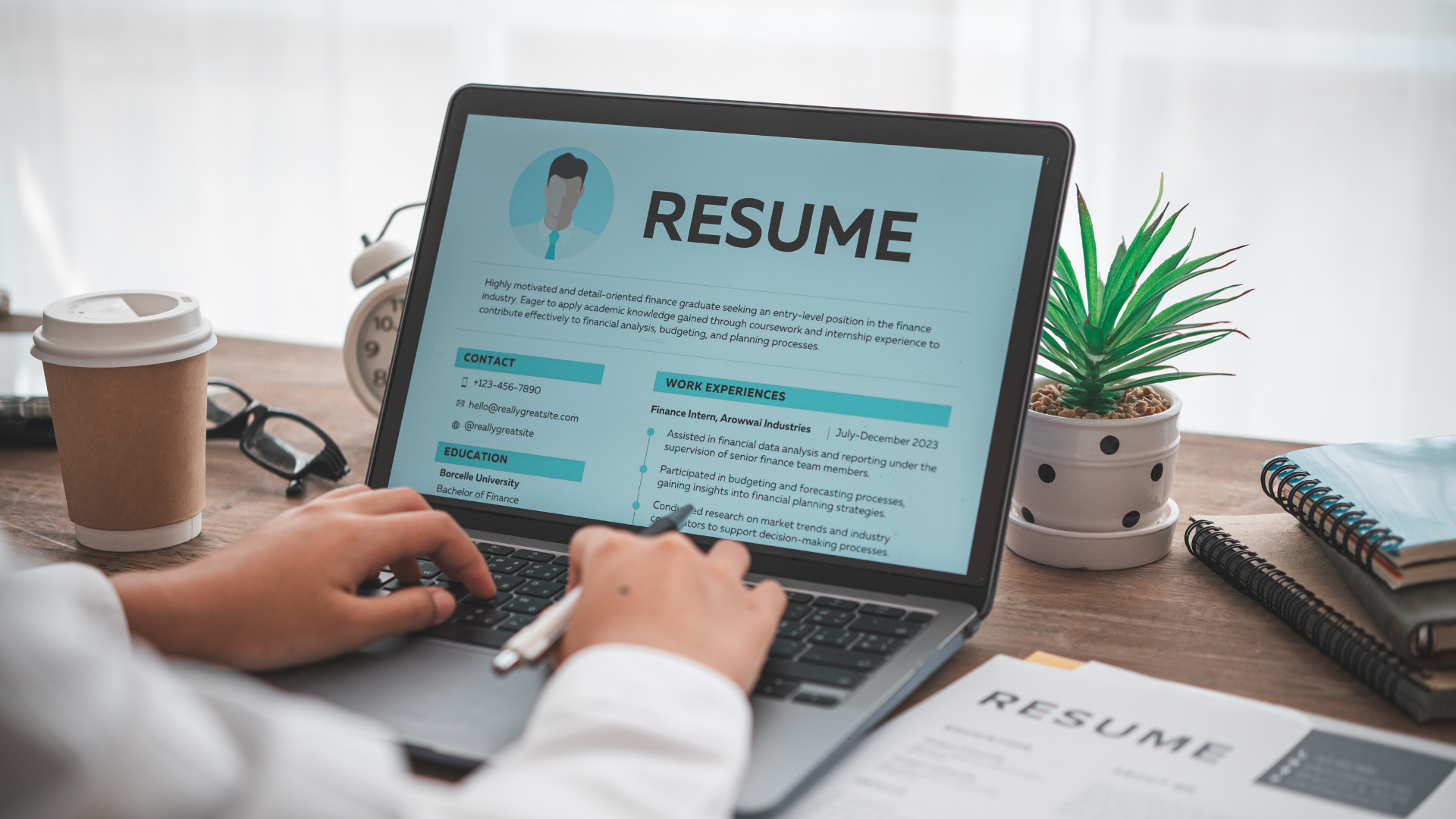
For decades, the CV has been the main currency of the job application. It summarised where you had worked, what you had done and why you deserved an interview.
That has not disappeared. But its role is changing.
As generative AI makes it quicker and easier to produce polished applications, employers are dealing with a new problem: a well-written CV does not necessarily provide the same signal of capability it once did.
Research published in 2026 found that 93% of surveyed employers were experiencing difficulty identifying standout candidates. High application volumes and assessing AI-generated CVs were each cited by 37% of employers as challenges when trying to distinguish candidates.
At the same time, skills-based hiring continues to gain ground. LinkedIn's Future of Recruiting research found that more than nine in ten talent acquisition professionals believe accurately assessing candidates' skills is crucial to improving quality of hire.
The CV still matters. But increasingly, it may be the document that gets you considered rather than the evidence that gets you hired.
The CV is becoming a starting point, not the final proof
A traditional CV asks employers to take a number of things at face value.
You say you are an excellent stakeholder manager. You list project management as a strength. You describe yourself as commercially minded or adaptable.
The problem is that many other applicants are saying exactly the same thing.
When applications become easier to produce and increasingly polished, employers have more reason to look for evidence behind the claims.
The World Economic Forum reports that work experience remains the most common way employers expect to assess skills between 2025 and 2030, used by 81% of surveyed businesses. Skills assessments are expected to be used by 48%.
That means candidates need to think beyond, "Does my CV describe me well?"
The stronger question is, "What could I show an employer that proves what I have described?"
Employers increasingly want evidence of what you can do
This does not necessarily mean every recruitment process will suddenly involve lengthy testing.
Evidence can take many forms.
For some roles, it could be a portfolio, writing sample, presentation or technical assessment. For others, it might simply mean being able to explain a real situation where you solved a problem, improved a process, retained an important customer or delivered a measurable outcome.
The difference is specificity.
"Managed key accounts" tells an employer what was in your job description.
"Managed a portfolio of 40 key accounts and retained three major clients that had been identified as at risk" shows what you actually contributed.
Candidates who prepare this evidence before the interview are better positioned when employers start looking beneath the wording of the CV.
Interviews carry more weight when applications look similar
The more polished applications become, the more valuable genuine conversation can become.
An interview allows an employer to test whether the experience outlined on a CV holds up when they ask follow-up questions.
What happened?
What was your personal contribution?
What went wrong?
What would you do differently?
How did you make the decision?
These questions are difficult to answer convincingly with generic preparation.
That makes interview preparation less about memorising ideal answers and more about understanding your own experience in detail.
Before an interview, identify several examples covering problem-solving, communication, conflict, achievement, adaptability and mistakes. Know enough about each situation that you can explain what you personally did rather than what the broader team delivered.
Your examples and results matter more than polished language
There is nothing wrong with using AI to improve the clarity of an application. The risk is allowing the finished document to become more impressive than the experience behind it.
A CV full of phrases such as "strategic leader", "results-driven professional" and "proven communicator" is weak if you cannot demonstrate those qualities.
Current employer research points in the same direction. When asked what helped applicants stand out, employers identified tailored experience, clear communication and evidence of adaptability or problem-solving among the leading factors.
Candidates should therefore spend at least as much time collecting evidence as polishing wording.
Look through previous projects, performance reviews, targets, customer feedback and achievements. Where possible, quantify the result.
Revenue increased.
Processing time fell.
Customer satisfaction improved.
A difficult vacancy was filled.
A project was delivered ahead of schedule.
A problem was identified before it became expensive.
Specific evidence gives employers something a generic application cannot.
How to prepare for a hiring process that goes beyond the CV
Start by treating your CV as the first layer of your application rather than the whole application.
Make sure the experience you include can survive deeper questioning. Prepare examples that demonstrate the capabilities most relevant to the role. Keep appropriate work samples or portfolio material where your profession allows it. Think carefully about who could provide a meaningful reference.
Most importantly, stop relying on adjectives to communicate value.
Being "commercial", "adaptable" or "collaborative" means very little until you can demonstrate it.
The CV is unlikely to disappear. Employers still need a practical way to compare experience and decide who progresses.
What is changing is the amount of weight that document can carry by itself.